
Why Rim Joists Are Your Home's Biggest Hidden Energy Leak
Rim joists cause 15-20% of home air leakage. Learn why this hidden area creates cold floors, high energy bills, and moisture problems in Missouri homes.
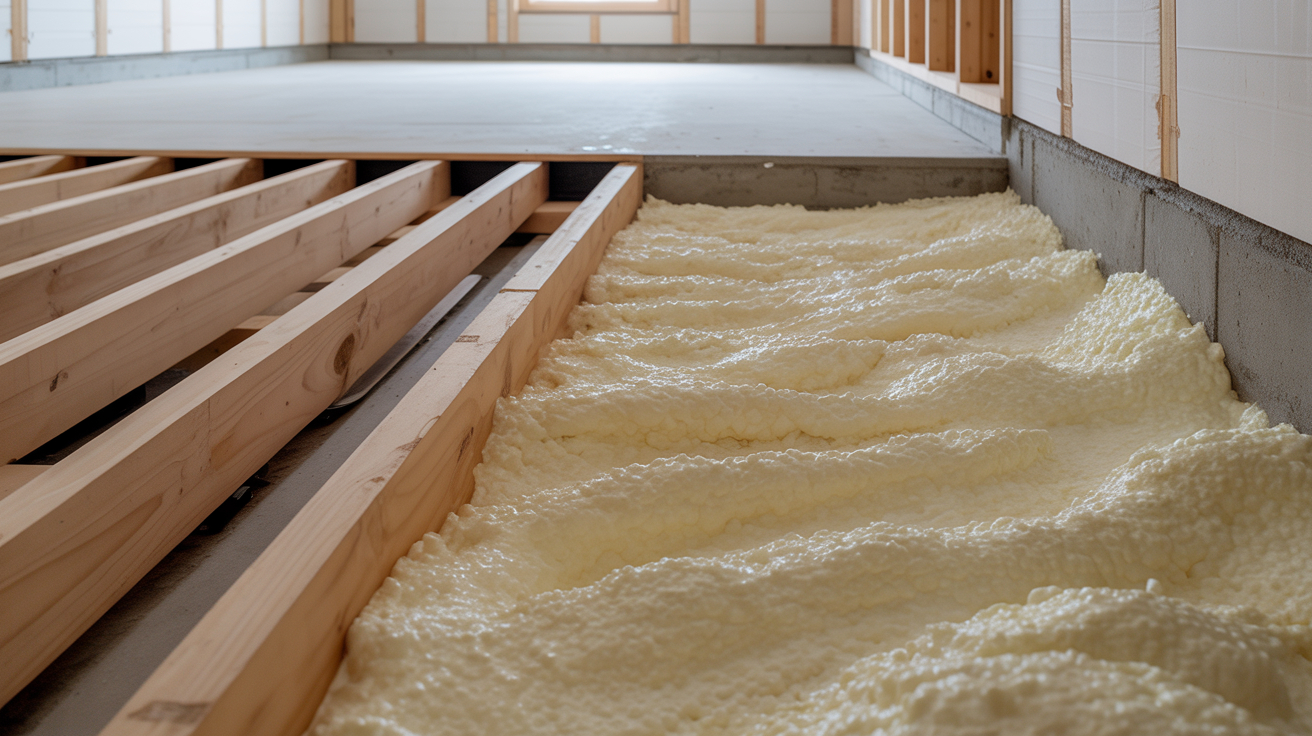
Why Rim Joists Are Your Home's Biggest Hidden Energy Leak
Walk into your basement on a cold January morning, and you'll likely feel a draft near the foundation walls. Run your hand along the top of the basement wall where it meets the floor joists, and you might notice cold air seeping through. That vulnerable transition zone—where your home's wooden floor structure meets the concrete or block foundation—is called the rim joist assembly, and it's one of the most significant sources of energy loss in Missouri homes.
Most homeowners focus on attic insulation or drafty windows when trying to improve comfort and reduce utility bills. Yet the rim joist area, hidden behind drywall or tucked into unfinished basement ceilings, quietly accounts for a disproportionate share of air leakage. Understanding why this structural component behaves so differently from the rest of your home's envelope reveals opportunities for meaningful improvements that deliver immediate, measurable results.
What Are Rim Joists and Where Are They Located?
Rim joists—also called band joists or header joists—form the perimeter of your home's floor framing system. These dimensional lumber boards sit vertically on top of the foundation wall and cap the ends of the floor joists that span your basement or crawl space. In a typical wood-frame house, rim joists run continuously around the entire foundation perimeter at each floor level.
You'll find rim joists in several locations throughout your home. The most common and problematic area is where the first-floor framing meets the foundation in the basement or crawl space. In two-story homes, another rim joist assembly exists where the second-floor framing meets the exterior walls. Homes built over unheated garages have rim joists separating the living space from the garage below.
The rim joist cavity—the space between the foundation wall and the interior of your home—typically measures about 9 to 11 inches deep, depending on your floor joist size. This cavity creates a direct thermal connection between outdoor conditions and your conditioned living space, with only a single board (often just 1.5 inches thick) separating the two environments.
Why Rim Joists Leak So Much Air and Energy
Rim joist assemblies leak air for several interconnected reasons related to construction methods and material properties. During framing, builders must create numerous penetrations through the rim joist for plumbing pipes, electrical conduits, HVAC ducts, and other utilities. Each penetration creates a pathway for air movement that's difficult to seal effectively with conventional methods.
The connection between the rim joist and the foundation wall below rarely achieves an airtight seal. Concrete and block foundations settle and shift slightly over time, creating microscopic gaps at the sill plate interface. The sill plate itself—the treated lumber that sits directly on the foundation—often warps or twists as it ages, opening additional air pathways. Even when builders install a sill seal gasket during construction, these foam strips compress unevenly and deteriorate over decades of exposure to moisture and temperature fluctuations.
Wood is hygroscopic, meaning it absorbs and releases moisture in response to humidity changes. As rim joists expand and contract with seasonal moisture cycles, the connections between framing members loosen. Gaps that measure mere fractions of an inch still allow substantial air movement because of the pressure differences that naturally occur between basements and upper floors. Understanding how moisture affects structural assemblies helps explain why rim joists remain vulnerable even in well-maintained homes.
The rim joist cavity also experiences extreme temperature differences. In winter, the outdoor-facing surface of the rim joist might drop to 20°F while the interior surface remains near 65°F. This temperature gradient drives heat loss through conduction while simultaneously creating convective air currents within the cavity itself. Warm indoor air rises through any available gaps, escapes through the rim joist area, and draws cold outdoor air in through lower openings—a phenomenon that compounds the energy penalty.
How Rim Joist Air Leaks Affect Missouri Homes
Missouri's climate creates specific challenges that make rim joist air leakage particularly problematic. Our region experiences significant temperature swings throughout the year, with winter lows regularly dropping below 20°F and summer highs exceeding 95°F. These extremes amplify the temperature differential across the rim joist assembly, accelerating heat loss in winter and heat gain in summer.
Humidity presents an equally important concern. Missouri's humid continental climate means we face both cold, dry winter air and hot, humid summer conditions. When warm, moisture-laden summer air infiltrates through rim joist gaps into the cooler basement environment, the moisture condenses on cold surfaces. This condensation creates ideal conditions for mold growth, wood rot, and structural deterioration. Homeowners often discover these moisture problems only after significant damage has occurred, because the rim joist area remains hidden behind finished walls or stored items.
The stack effect—the natural tendency for warm air to rise through a building—intensifies rim joist air leakage. During heating season, warm air from your living spaces rises toward the attic while simultaneously drawing cold air in through basement-level openings. Rim joist gaps serve as primary entry points for this cold air infiltration. The result is cold floors in winter, uncomfortable drafts near exterior walls, and HVAC systems that run continuously trying to maintain comfortable temperatures.
Energy costs reflect this continuous air leakage. Studies by building science researchers have found that rim joist air leakage can account for 15-20% of total home air infiltration, despite representing less than 5% of the building envelope's surface area. For a typical Missouri home, this translates to hundreds of dollars in wasted heating and cooling costs annually—money that literally flows through gaps you can't see.
Why Traditional Insulation Fails in Rim Joist Cavities
Many older homes have fiberglass batts stuffed into rim joist cavities, often installed by well-intentioned homeowners or contractors who recognized the area needed attention. Unfortunately, fiberglass insulation performs poorly in this application for several fundamental reasons related to how the material works.
Fiberglass insulation slows heat transfer by trapping air within its fibrous matrix. However, it does nothing to stop air movement through the cavity. When cold outdoor air flows through gaps in the rim joist assembly, it moves right through the fiberglass, carrying heat away through convection. The insulation's R-value—its resistance to conductive heat transfer—becomes largely irrelevant when air is moving freely through the space.
Moisture compounds the problem. Fiberglass absorbs water vapor from humid air, and wet fiberglass loses most of its insulating value. In rim joist applications, where temperature differentials create condensation risk, fiberglass often becomes damp during humid months. The material then holds moisture against the wooden rim joist, promoting rot and mold growth. Homeowners who pull out old fiberglass from rim joist cavities frequently discover blackened, deteriorated wood behind the insulation.
The irregular geometry of rim joist cavities makes proper fiberglass installation nearly impossible. Plumbing pipes, electrical wires, and blocking between joists create obstacles that prevent continuous insulation coverage. Gaps around these penetrations allow air to bypass the insulation entirely. Even professionally installed fiberglass batts typically leave 10-20% of the rim joist area uninsulated due to these obstructions.
Rigid foam board insulation performs better than fiberglass but still falls short of optimal performance. Cutting rigid foam to fit tightly around all the pipes, wires, and irregular framing members requires meticulous craftsmanship. The seams between foam pieces and the gaps around penetrations must be sealed with caulk or spray foam—work that's tedious, time-consuming, and rarely executed perfectly. Any unsealed gaps allow air leakage to continue, undermining the insulation's effectiveness.
How Spray Foam Seals Rim Joists Permanently
Closed-cell spray foam insulation addresses rim joist air leakage through a fundamentally different approach. Rather than simply slowing heat transfer, spray foam creates an air-impermeable barrier that stops air movement completely while simultaneously providing high R-value insulation. This dual function—air sealing and insulation in a single application—makes spray foam uniquely effective for rim joist assemblies.
During application, spray foam expands to fill every gap, crack, and irregular space within the rim joist cavity. The foam flows around plumbing pipes, electrical conduits, and framing irregularities, then expands to create continuous contact with all surfaces. This expansion eliminates the air gaps that compromise other insulation types. Once cured, closed-cell spray foam forms a rigid, moisture-resistant barrier that remains stable for decades.
The air-sealing properties of spray foam deliver immediate, noticeable improvements. Homeowners typically report warmer floors, reduced drafts, and more consistent temperatures throughout the house within days of rim joist spray foam installation. These comfort improvements occur because the foam eliminates the cold air infiltration that previously flowed continuously through the rim joist area.
Spray foam also provides moisture protection that traditional insulation cannot match. Closed-cell foam acts as a vapor barrier, preventing humid outdoor air from reaching the cold rim joist surface where condensation would occur. This moisture control protects the wooden framing from rot and mold while simultaneously preventing the musty odors that often develop in basements with inadequate rim joist insulation. Proper moisture management in below-grade spaces requires addressing rim joists as part of a comprehensive approach.
The structural benefits extend beyond energy and moisture control. Closed-cell spray foam adds racking strength to the rim joist assembly, helping the structure resist lateral forces from wind and seismic events. While this structural contribution isn't the primary reason for installing spray foam, it represents an additional benefit that other insulation types don't provide.
What Homeowners Should Look For During Inspections
If you're evaluating your home's rim joist insulation, several signs indicate problems that warrant attention. Start by visiting your basement or crawl space on a cold, windy day. Hold your hand near the rim joist area—the top of the foundation wall where it meets the floor framing. If you feel cold air movement or notice temperature differences compared to interior walls, air leakage is occurring.
Look for visible gaps or cracks where the rim joist meets the foundation wall. Shine a flashlight along the sill plate and watch for light penetrating from outdoors. Even small gaps indicate air leakage pathways that compromise comfort and energy efficiency. Check around utility penetrations—anywhere pipes, wires, or ducts pass through the rim joist. These areas frequently have large, unsealed gaps that allow substantial air movement.
Examine any existing insulation in the rim joist cavities. If you see fiberglass batts, check whether they're compressed, falling down, or showing signs of moisture damage such as discoloration or a musty smell. Compressed or wet fiberglass provides minimal insulation value and should be removed and replaced with spray foam. If you find rigid foam board, look for gaps between pieces and around penetrations. Even small unsealed gaps significantly reduce the insulation's effectiveness.
Consider the age and construction method of your home. Houses built before 2000 rarely have adequate rim joist insulation, and many newer homes still use suboptimal approaches. Homes with finished basements often have rim joists hidden behind drywall, making inspection difficult without removing wall sections. In these cases, energy audits with thermal imaging cameras can reveal air leakage patterns without destructive investigation.
When planning rim joist insulation improvements, prioritize spray foam application by qualified professionals. The investment typically pays for itself through energy savings within 5-7 years, while delivering immediate comfort improvements and long-term moisture protection. For homeowners addressing multiple insulation needs, rim joists should rank near the top of the priority list due to their disproportionate impact on whole-house performance.
Understanding where your home loses energy helps you make informed decisions about improvements that deliver real value. Rim joists may be hidden from view, but their impact on comfort, energy costs, and structural durability makes them one of the most important areas to address when upgrading your home's thermal envelope.